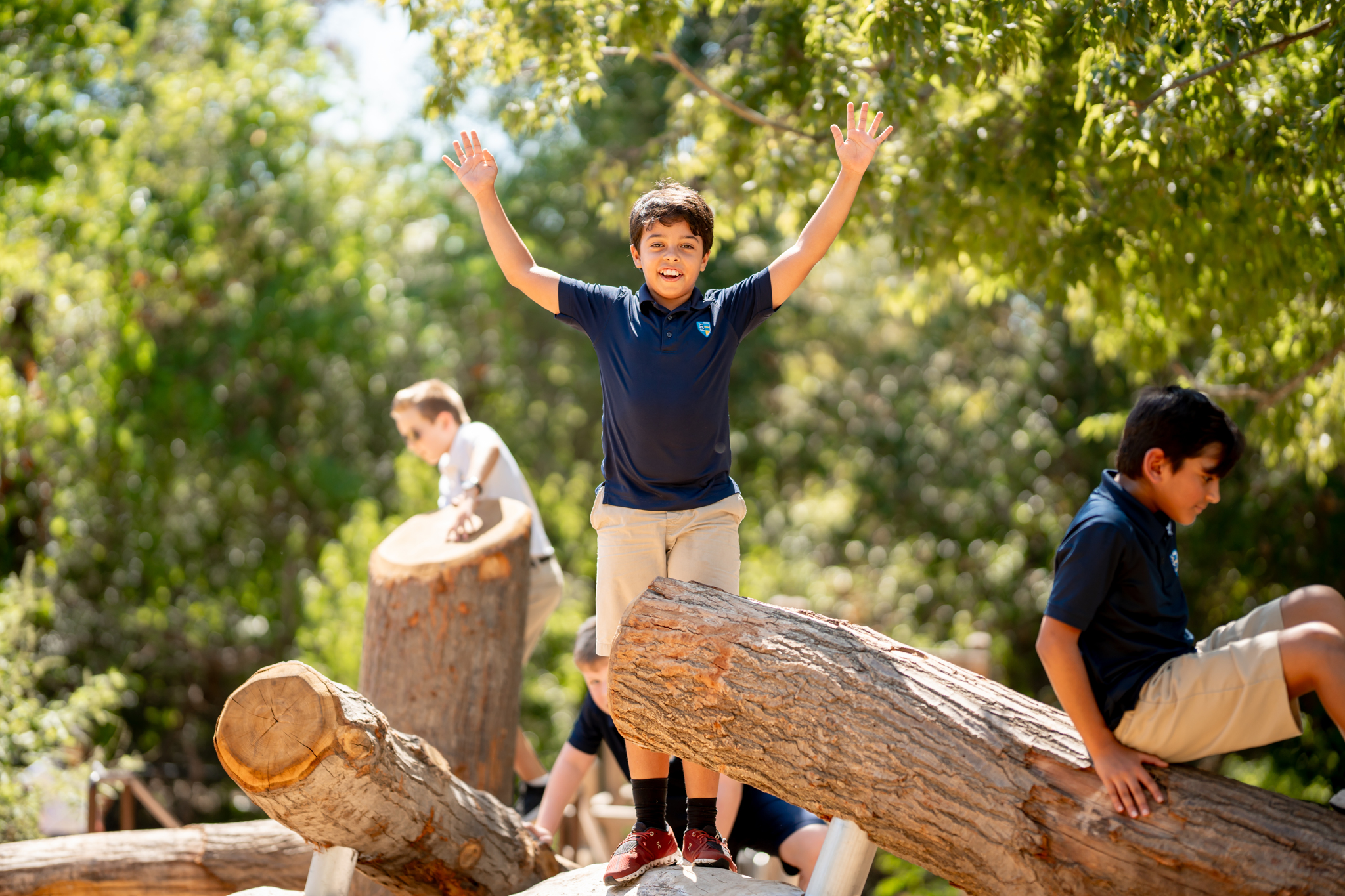
Nature play reflects schools’ core values and educational mission. Outdoor environments are being created as sensory-rich nature-based learning spaces for schools, where collaboration, connection, and creativity are part of daily life at school. These landscapes are intentionally designed so that the outdoors is part of the curriculum.
When the canopy stretches overhead, and the living soil microbiome thrives underfoot, the environment becomes dynamic and alive. Shade patterns shift throughout the day. Leaves cycle through the seasons. Soil supports insects, microorganisms, and plant life. Children experience these changes directly.
Nature play environments recognize children as capable learners who build understanding through hands-on engagement and child-led learning. By designing with living materials, varied terrain, and open-ended elements, schools create spaces that support whole-child development.
Gross Motor Play: Strength, Coordination, and Confidence
Natural features such as logs, boulders, and varied terrain invite climbing, balancing, and jumping. These experiences strengthen large muscle groups and refine coordination.
Graduated challenge supports children in assessing their own readiness and building confidence through movement. Their ability to risk assess expands as they navigate slopes, step across stones, and move through textured ground surfaces.
Fine Motor Play: Precision and Problem-Solving
Sand and water areas, along with small loose parts such as sticks, pebbles, and shells, encourage detailed and focused exploration. Children pour, sift, stack, sort, and construct. These actions refine dexterity while nurturing concentration and critical thinking, and are one of the benefits of natural playgrounds for children.
Creative and Dramatic Play: Imagination, Language, and Social Development
Open-ended natural playgrounds invite storytelling and imaginative role play. A grove of trees becomes a meeting place. A cluster of stones becomes the foundation of a shared narrative. Through collaborative storytelling, children strengthen communication skills and practice empathy.
Quiet and Contemplative Play: Focus, Regulation, and Reflection
Sensory-rich landscapes include shaded areas, secluded nooks, and planted spaces for observation and quiet engagement. These spaces support focus and emotional regulation. Children watch insects move through the soil, trace patterns in leaves, and sit beneath the canopy. Reflection becomes part of the daily rhythm.
Play with Loose Parts and Real Tools: Curiosity and Agency
Branches, stones, sand, and thoughtfully introduced real tools provide opportunities for invention and construction. Children design structures, test stability, adapt ideas, and collaborate on shared projects. This fosters responsibility, independence, and cognitive flexibility. Children experience themselves as capable builders and problem-solvers.
Sensory Engagement: Sensory-Rich Learning and Connection
Nature-based play environments are inherently sensory-rich. Texture underfoot, wind in leaves, bark beneath the hands, and shifting light through the canopy create a rich sensory experience. Engagement deepens when learning is grounded in lived experience.
Integrated Cognitive Outcomes: Holistic Development in Action
When gross motor, fine motor, creative, quiet contemplative, and constructive play intertwine, development unfolds naturally. Schools embracing nature play are designing outdoor learning environments that extend their mission and values. The result is a space where children move, build, imagine, collaborate, and reflect in a landscape that evolves to meet their changing needs as they grow.